AI glossary
Simple explanations of terms commonly encountered in AI adoption.
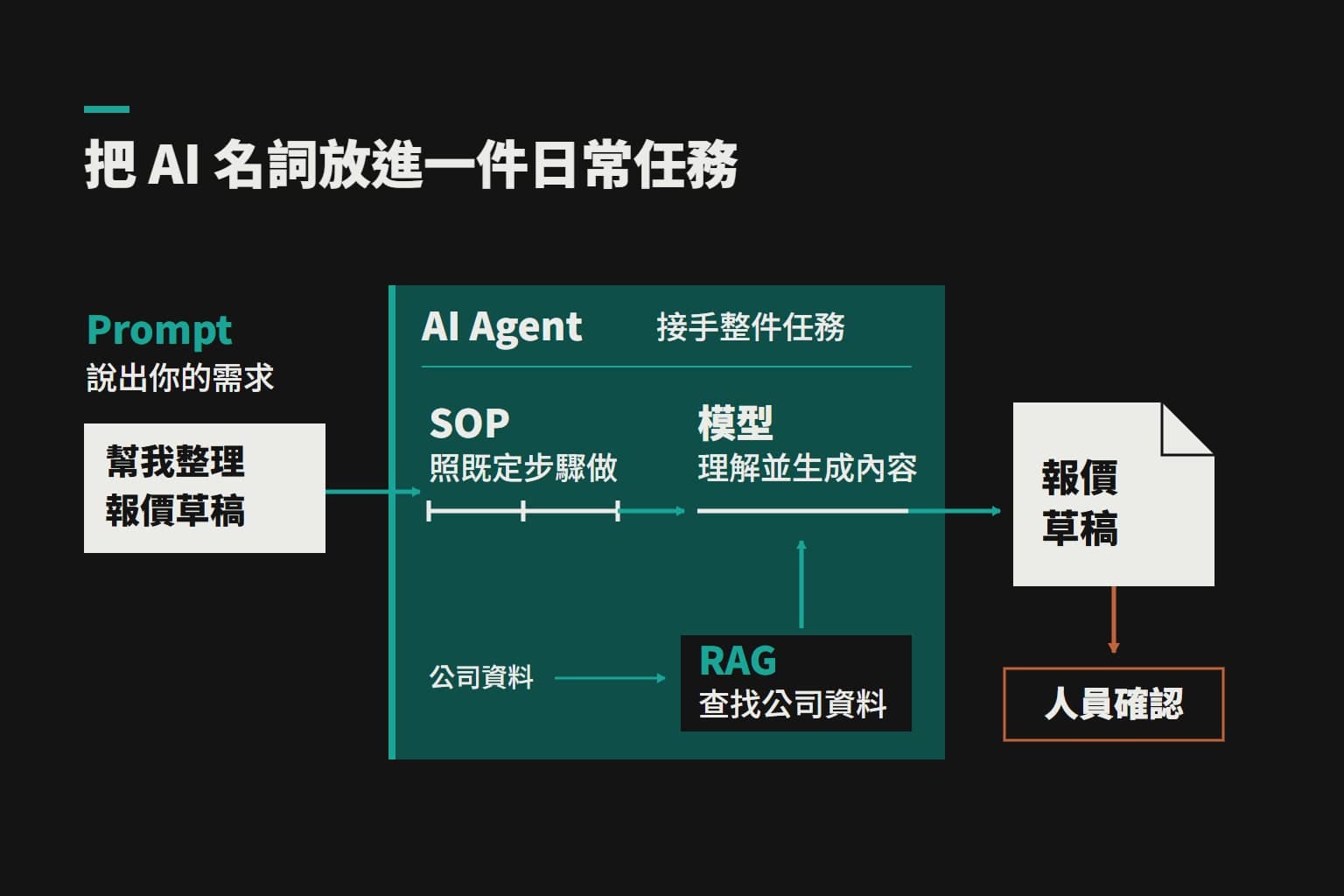
AI agent
An AI that can look up data, calculate and use tools on its own to complete work. Unlike chat AI, which only answers questions, it can complete a series of steps and then present the result for a person to confirm.
Model
The core of an AI that produces its answers. GPT, Claude and Gemini are models developed by different companies, and they vary in capability, price and speed. For most companies, it is enough to test them on real work and choose whichever suits. Because models are updated quickly, a system is best designed so the model can be changed later.
RAG
An approach that looks up data before answering. Before replying, AI finds relevant content in the knowledge base and answers from it, which reduces the chance of making things up.
API
An interface through which systems exchange data. When a system provides an API, other programs can obtain data or perform actions directly, without anyone copying and pasting by hand.
Integration
Connecting two tools so that data passes between them automatically. For example, when a customer fills in a form, the data is automatically written to a spreadsheet and the responsible employee is notified.
Token
The unit AI uses to measure usage, counted on both input and output. Cloud AI is mostly billed by usage, so more questions, longer documents and stronger models usually cost more. Assigning simple work to a cheaper model can lower the cost.
AI hallucination
When AI states wrong content with confidence, or even invents data that does not exist. No current model can avoid it entirely, so AI should answer from data, the system should calculate the numbers, and a person should confirm important matters.
Local AI
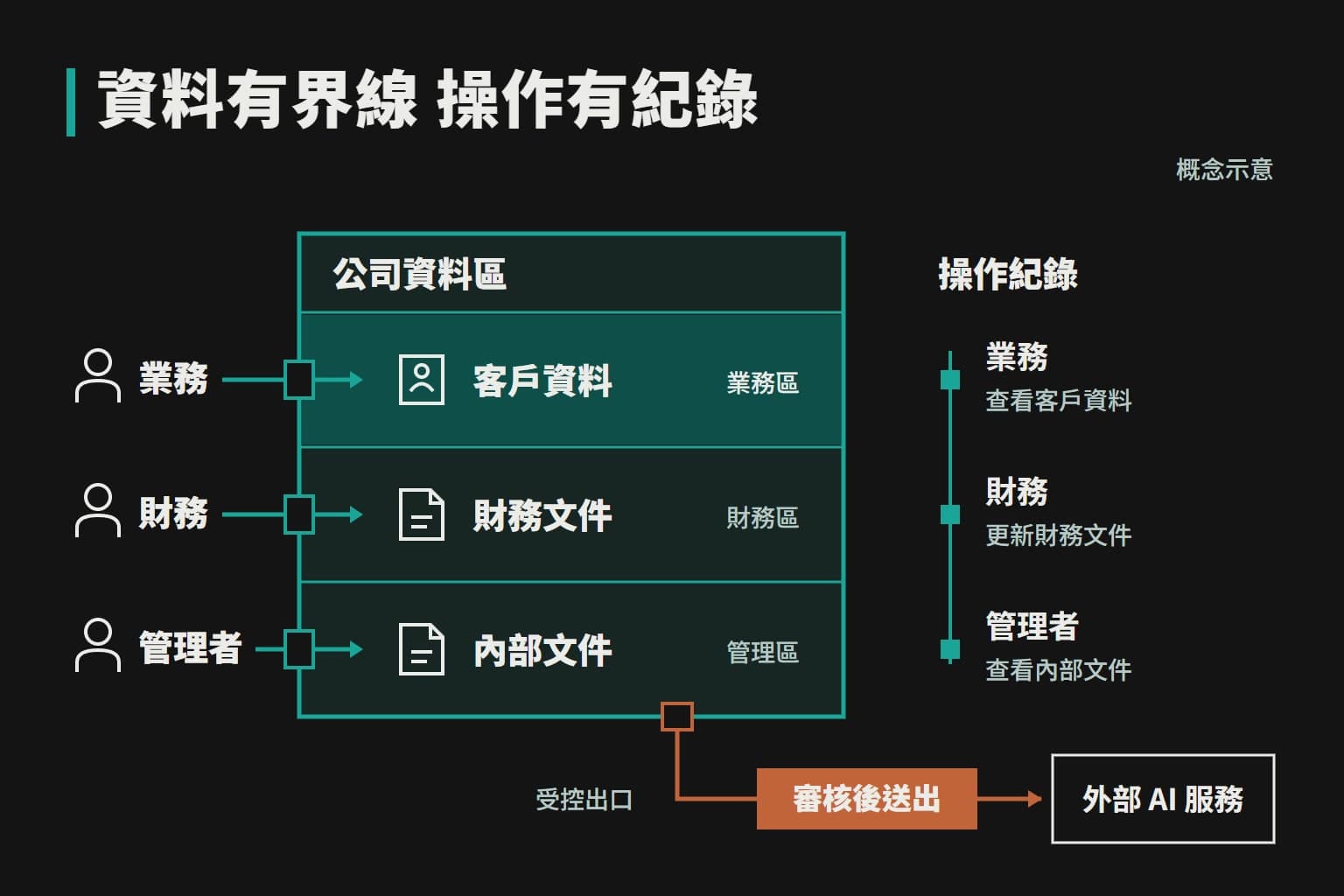
A model installed on the company’s own equipment, so data can stay inside the company. It requires buying equipment, and is usually less capable than the strongest cloud models. For the trade-offs, see Data security and AI.
SOP
A standard operating procedure: the steps for carrying out a piece of work. AI needs to understand how your company works in order to help, so SOPs are very useful. Where nothing is written down, the actual method can be documented through interviews.
POC
A proof of concept: a small-scale trial that confirms something works before deciding whether to expand it, which avoids investing too much at the outset.
ROI
Return on investment, a measure of how much return a cost brings. When assessing AI, note that hours saved do not necessarily mean cash saved, unless that time actually brings in more revenue or reduces overtime and staffing costs.
Prompt
An instruction or question given to AI. Once AI is integrated into a company’s workflows, employees usually only need to make requests in their normal way, because the system’s instructions are set up in advance.
MCP
A common specification that lets AI connect to various tools and data. It can be thought of as a universal connector for AI tools.
GEO
Generative engine optimization: the practice of making company content easier for AI search and question-answering services to find and cite. The fundamentals are similar to SEO, which is to write content that is clear, specific and reliable.
Further reading


This article is general information, not legal, tax or financial advice. Actual timelines, costs and results depend on each company and on written agreement.