AI applications by department
Using real work in finance, sales, customer support, administration and operations as examples, this article explains how AI assists, what it requires and which steps a person still confirms.
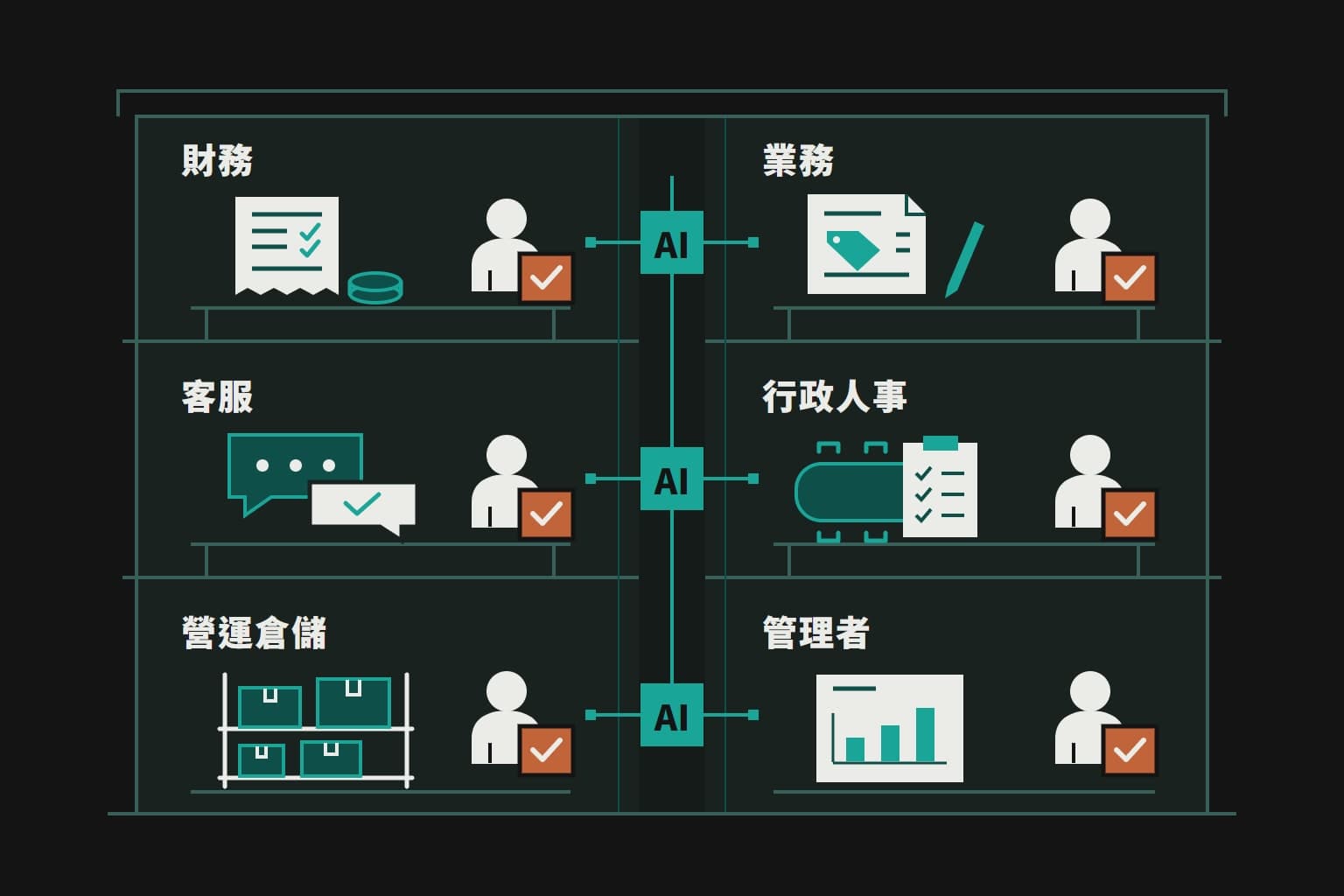
Finance
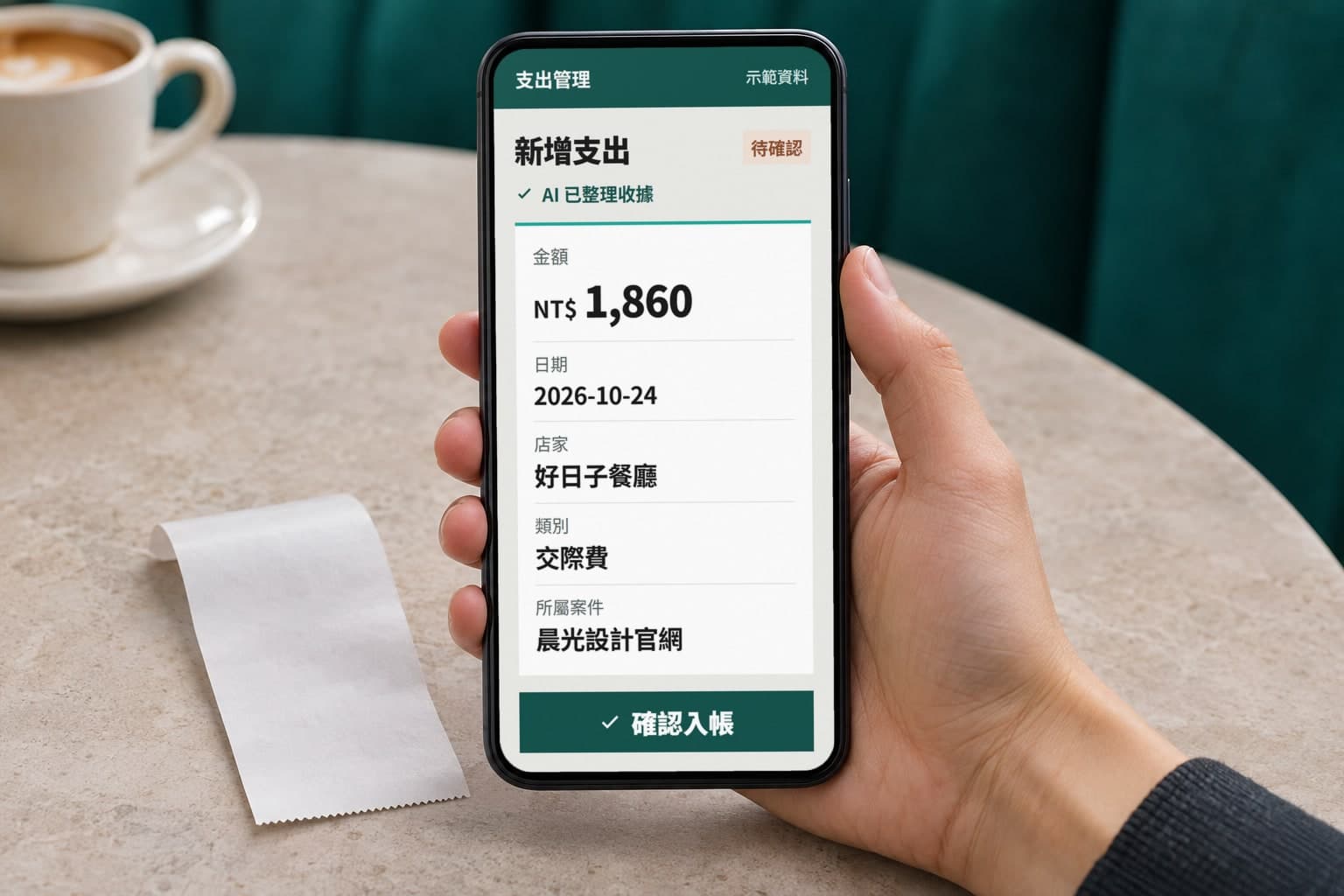
Booking receipts
- EmployeePhotographs a receipt
- AIReads the shop, date and amount, determines the category and project, and produces a confirmation card
- EmployeeConfirms, and it is booked
There is no need to wait and process everything together at month end. The category choices may not match your company’s habits at first, but they improve as rules are provided. Specific accounting treatments should follow your accountant’s practice. What you need to prepare is the accounting categories your company commonly uses and a few real receipts.
Reconciliation and collections
AI can compare quotes, invoices and payment records, list items that have been invoiced but not paid along with the days overdue, list the installments due for invoicing this month on installment projects, and help draft reminder emails, while a person decides whether to send them and in what tone. Bank deposit notes often do not match customer names, so AI deals first with the clear matches and flags the rest for a person to check.
VAT preparation
AI can organize the output and input invoices for the period, calculate the amounts, and flag duplicate numbers or incorrect tax IDs. Whether an amount is deductible, and the related tax treatment, should follow your accountant’s advice.
Sales

Quotes
- SalespersonAsks to “prepare a website quote for Chenguang Design”
- AIChecks the client and past quotes and lines up the items
- SystemCalculates the tax-inclusive amount and produces a draft
- SalespersonEdits it, and it is created only after confirmation
Besides saving time, this also reduces the use of old prices and missed tax. What you need to prepare is your common items, prices and past quotes. Discounts remain a manager’s decision, and AI can provide past prices and margins for reference.
Client follow-up
AI can use the last contact date, the previous discussion and the date a quote was sent to list the clients to contact that day, and can help draft messages based on earlier conversations. This requires a place where contact records can be looked up. If the records exist only in someone’s personal LINE, first set up a simple way of recording them, such as dictating after a meeting and having AI organize it into the client’s record.
Contract review
AI is well suited to summarizing long contracts into key points, such as payment terms, penalties, expiry dates and automatic renewal clauses. It can also compare a contract with earlier versions so the reviewer knows where to pay particular attention. It cannot replace legal advice, and important contracts should still be confirmed by your legal staff or a lawyer.
Customer support

How AI support differs from keyword bots
Traditional bots rely on keywords and cannot answer if a question is phrased slightly differently. Today’s AI understands meaning, so it can ask for an order number, clarify what is needed and take contact details. It still needs correct data, however, and anything the data does not cover should be passed to a person.
Complaint handling
- AIReceives the customer and establishes what happened and the order details
- AIClassifies the case and judges its urgency
- Responsible employeeTakes over the organized information, so the customer does not have to explain again
Compensation, refunds and external commitments should not be decided by AI. When a customer is clearly upset, or the matter involves safety or the law, it should also be passed to a person as soon as possible.
Administration and HR

Meeting notes
This is a low-barrier, low-risk starting point. From a recording or transcript, AI can organize decisions, action items, owners and deadlines, and list the previous action items before the next meeting. Several people talking at once, specialist terms and personal names are more prone to error, so we recommend having someone do a quick check afterward. For meetings with sensitive content, first confirm where the data is processed, and tell participants before recording.
New hire training and company policies
Once the employee handbook, leave rules and common procedures are set up as an internal knowledge base, new hires can look things up at any time and senior employees are interrupted less. Someone must be responsible for keeping the data updated, and permissions should be set for data such as pay and performance reviews.
Rotas
Rota planning involves calculating many conditions. The first version is usually produced with scheduling rules or software, and AI then helps collect leave requests, check shift swaps and explain things to employees. We recommend having a manager confirm the final rota. Whether it complies with regulations should be determined by the rules of the competent authority or by professional advice.
Operations and warehousing
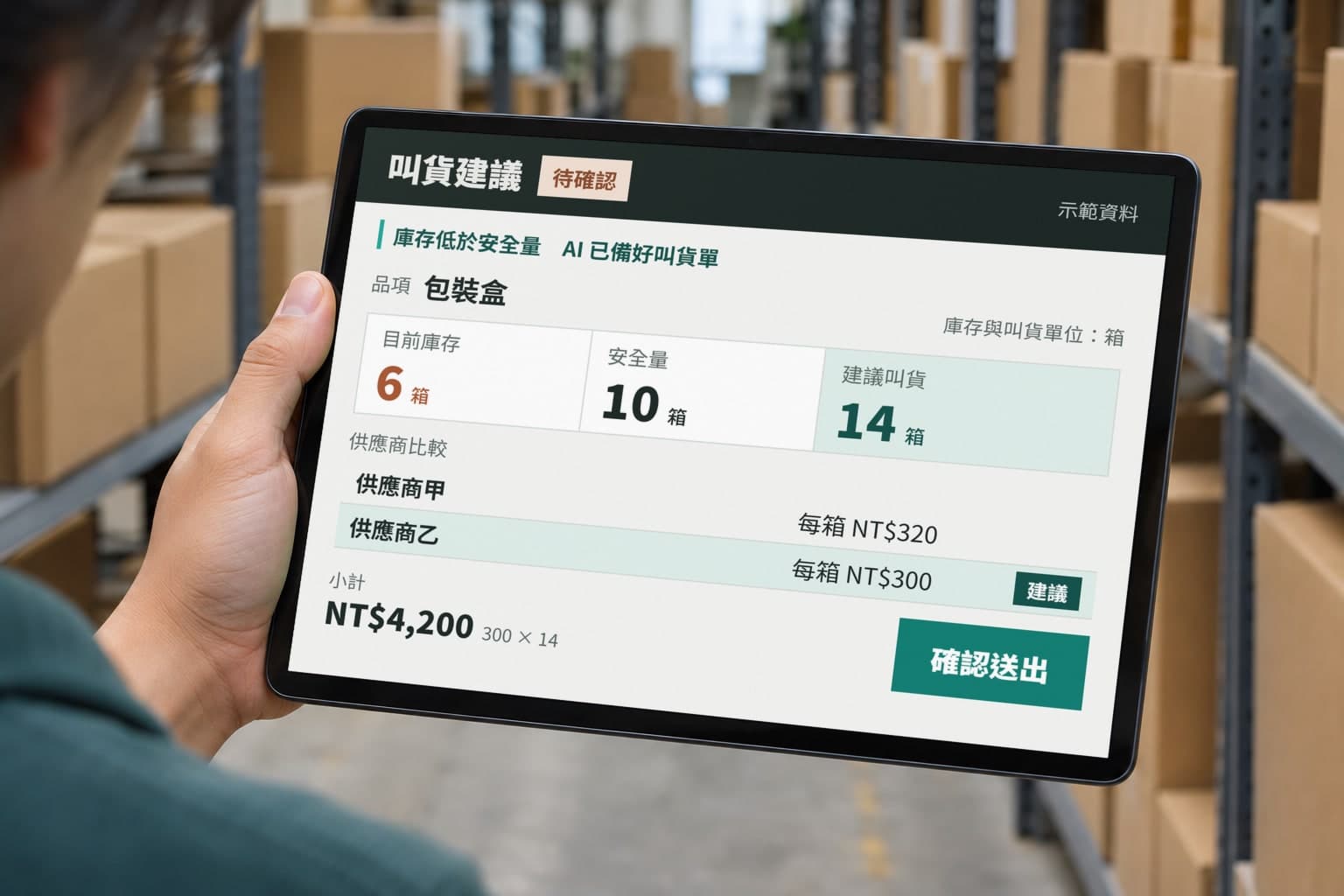
Ordering and stock
- AISends a reminder when stock falls below the safety level
- AIChecks past orders, compares supplier prices, calculates a suggested quantity and produces a stock order
- A personConfirms, and it is sent
This requires accurate stock figures. If the system differs widely from what is actually on hand, establish recording habits first. Sales forecasts are less accurate when there is seasonality or a sudden event, so we recommend combining them with the judgement of experienced employees.
When the same data must be entered into several systems
If the systems can be integrated, automation lets you enter data once and have the other systems update together. If an older system cannot be integrated directly, you can look at its import and export functions or consider consolidating the duplicated parts. What is actually feasible can be determined only after looking at the systems.
Managers

Seeing the state of the company in real time
If your data is already in a system or spreadsheet, managers can directly ask how much has been collected this month, which clients owe money or which project has the lowest margin. They can also receive a weekly summary that flags overdue payments and cost anomalies. This requires that daily work leaves data behind, so we often recommend starting with work that happens every day, such as booking receipts and quotes, and the data builds up as a result.
Analysis and suggestions from AI
AI is good at drawing key points out of large amounts of data, such as popular products, common questions and peak hours, and it can also suggest possible causes and courses of action. However, it does not understand your company’s relationships with its customers, may not know the latest market changes, and sometimes mistakes coincidence for cause and effect. We recommend asking AI to list the numbers and its basis, and letting managers make the judgement.
Further reading


This article is general information, not legal, tax or financial advice. Actual timelines, costs and results depend on each company and on written agreement.